

Electric motors can be classified into DC motors and AC motors based on the input current:
(1) DC motors-Motors driven by direct current (DC). Depending on how the field circuit and armature circuit are connected, they can be further categorized into series-wound, shunt-wound, and compound-wound motors.
(2) AC motors-Motors driven by alternating current (AC). There are various types, primarily including:
a. Commutator motors (Universal motors)-These are created by adapting a series-wound DC motor for AC operation. Since the AC current changes direction simultaneously in both the field and armature circuits, the direction of the torque remains constant, allowing the motor to rotate continuously. Because they can operate on both AC and DC power, they are also known as "universal motors." This type of motor is commonly used in vacuum cleaners, sewing machines, and other household appliances.
b. Induction motors-Devices in which a rotor spins within a rotating magnetic field due to the action of eddy currents. The rotating magnetic field is not generated mechanically; instead, AC is passed through several pairs of electromagnets, causing the polarity of the magnetic poles to cycle-an effect equivalent to a rotating magnetic field. Three-phase induction motors (featuring three pairs of magnetic poles) are the most commonly used type. The operation of a DC motor is the exact reverse of a DC generator; in a generator, the induced current is produced by the induced electromotive force, so they flow in the same direction. In an electric motor, current is supplied by an external power source, and the direction of the induced electromotive force (EMF) is opposite to that of the armature current (I).
c. Synchronous motor-a motor in which the armature moves from one pole to the next with a periodicity synchronized to the direction of the input current. Such motors cannot start on their own; they must be brought up to the appropriate frequency using another motor or special auxiliary windings before the AC power can be connected. If a change in load alters the rotational speed, the speed falls out of sync with the AC frequency, disrupting the motor's operation and potentially causing it to stall or sustain damage. Due to these limitations, they are not widely used.
Working Principles of Power Tools
Popular Products
-
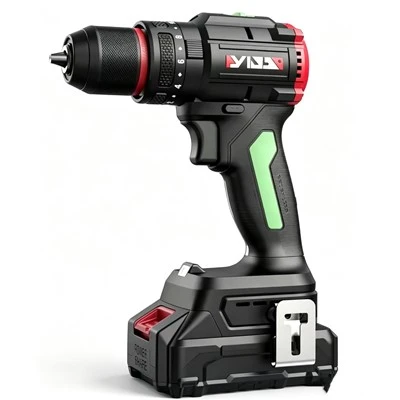
![20V Brushless Cordless Drill]() 20V Brushless Cordless Drill20V Brushless Cordless Drill for frequent brushless drilling and production fastening. Review drilling capacity,...read more
-
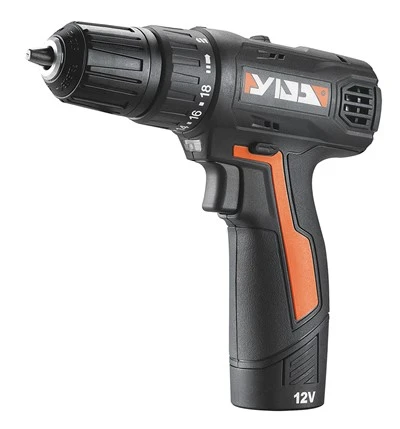
![12V Cordless Drill]() 12V Cordless Drill12V Cordless Drill for compact pilot drilling and light fastening. Review drilling capacity, chuck interface, speed...read more
-
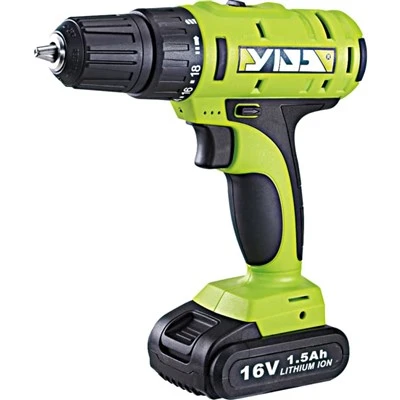
![16V Cordless Drill]() 16V Cordless Drill16V Cordless Drill for balanced cordless drilling for interior fit-out. Review drilling capacity, chuck interface,...read more
-
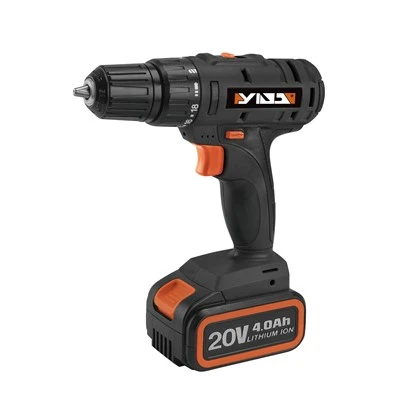
![20V Cordless Drill]() 20V Cordless Drill20V Cordless Drill for general jobsite drilling and assembly. Review drilling capacity, chuck interface, speed...read more
Send Inquiry