

Key considerations when purchasing power tools: Power tools are handheld or portable mechanized tools powered by electric motors or electromagnets, utilizing a transmission mechanism to drive a working head. Characterized by portability, ease of operation, and versatility, they significantly reduce physical exertion and boost work efficiency by mechanizing tasks that would otherwise be performed manually. Consequently, they are widely used in sectors such as construction, home renovation, automotive, machinery, electric power, bridge building, and gardening, and have become common in households.Regarding power tools:
1. Distinguish between home-use and professional-grade tools based on needs. Most power tools are designed for professionals; when purchasing, one should differentiate between professional and general household tools. The primary difference usually lies in power output: professional tools have higher power to reduce the workload for professionals, whereas household tools are used for smaller projects with lighter workloads, so high input power is not required.
2. The tool's packaging should feature clear graphics and be free of damage; plastic carrying cases should be sturdy, and the latches should be secure and durable.
3. The tool's appearance should have uniform coloring. Plastic parts should be free of obvious flow marks, dents, scratches, or impact marks. Misalignment between housing components should be ≤0.5mm. Coatings on aluminum castings should be smooth, attractive, and free of defects, and the entire unit should be free of oil and stains. The switch handle should feel smooth and even when gripped. The power cord should generally be at least 2 meters long.
4. Parameters on the tool's nameplate must match those on the CCC certificate. The instruction manual should include detailed addresses and contact information for both the manufacturer and the production facility. The nameplate or certificate of conformity should display a batch number for product traceability.
5. Hold the tool, connect it to the power supply, and operate the switch repeatedly to start the tool, observing whether the switch functions reliably. Simultaneously, check nearby televisions or fluorescent lights for any abnormalities to verify if the tool is equipped with an effective radio interference suppressor.
6. Run the tool for one minute while holding it; there should be no noticeable abnormal vibration. Observe the commutation sparks; they should not exceed level 3/2. Generally, looking through the air intake vent, there should be no visible arcing on the surface of the commutator. There should be no abnormal noise during operation.
These are drilling tools powered by electricity. They are standard products within the power tool category and represent the highest demand among all power tool types. Annual production and sales volumes account for 35% of China's total for power tools. Global sales of power tools are projected to grow at an annual rate of 5% over the next ten to fifteen years. Power tools are classified as low-value, consumable goods; in Europe and the United States, they serve not only as functional tools but also as popular gifts, indicating significant market growth potential.
How to Choose Power Tools
Popular Products
-
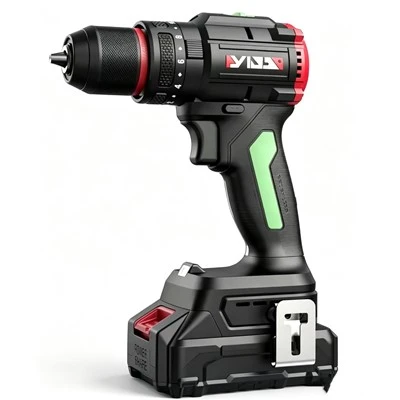
![20V Brushless Cordless Drill]() 20V Brushless Cordless Drill20V Brushless Cordless Drill for frequent brushless drilling and production fastening. Review drilling capacity,...read more
-
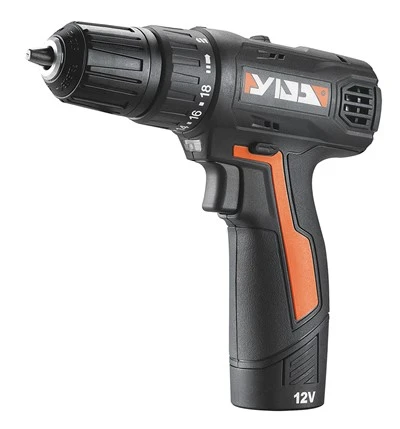
![12V Cordless Drill]() 12V Cordless Drill12V Cordless Drill for compact pilot drilling and light fastening. Review drilling capacity, chuck interface, speed...read more
-
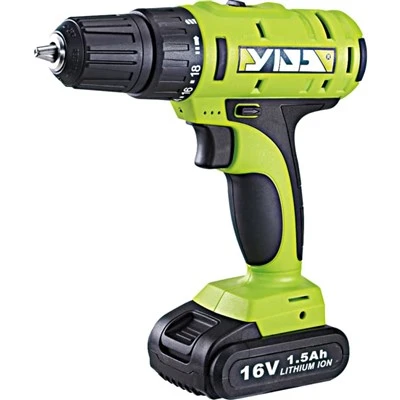
![16V Cordless Drill]() 16V Cordless Drill16V Cordless Drill for balanced cordless drilling for interior fit-out. Review drilling capacity, chuck interface,...read more
-
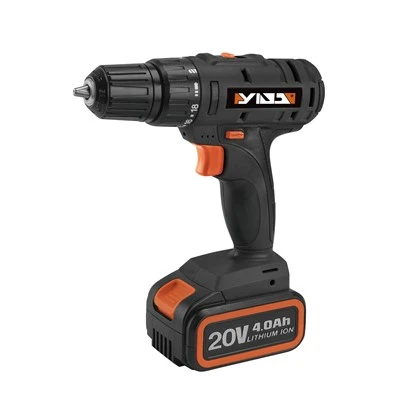
![20V Cordless Drill]() 20V Cordless Drill20V Cordless Drill for general jobsite drilling and assembly. Review drilling capacity, chuck interface, speed...read more
Send Inquiry