

Class
These tools are equipped with a grounding device, and their insulation structure relies on basic insulation for all or most parts. If the insulation fails, accessible metal parts-connected via the grounding device to the protective earth or protective neutral conductor of the fixed wiring-do not become live, thereby preventing electric shock to the operator.
Class
The insulation structure of these tools consists of either double insulation (comprising basic insulation plus supplementary insulation) or reinforced insulation. If the basic insulation fails, the operator remains isolated from live parts by the supplementary insulation, preventing electric shock. Class II tools must be fitted with non-rewirable power plugs and must not be grounded.
Class
These tools are powered by a safety voltage source. Safety voltage is defined as a no-load voltage with an RMS value not exceeding 50 V between conductors or between any conductor and earth; for three-phase power supplies, the no-load voltage RMS value between a conductor and the neutral line must not exceed 29 V. Safety voltage is typically supplied by a safety isolating transformer or a converter with independent windings. Class III tools must not be equipped with protective grounding devices.
Radio Interference
Single-phase series-wound motors (with commutators) and DC motors can generate significant electromagnetic interference affecting televisions and radios; therefore, power tool designs must incorporate measures to suppress radio interference. Common measures include shielding, symmetrical connection of excitation windings, and the installation of electrical filters (such as delta-connected filters). Where necessary, small inductors may also be connected in series at both ends of the motor armature.
Safety Protection for Power Tools
Next
Types of Power ToolsPopular Products
-
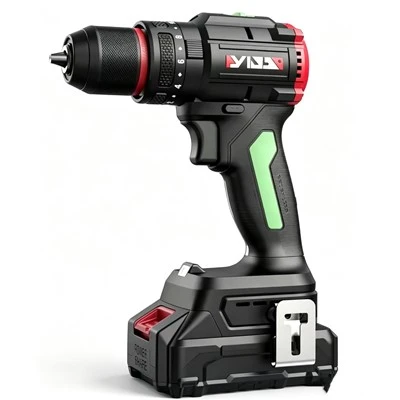
![20V Brushless Cordless Drill]() 20V Brushless Cordless Drill20V Brushless Cordless Drill for frequent brushless drilling and production fastening. Review drilling capacity,...read more
-
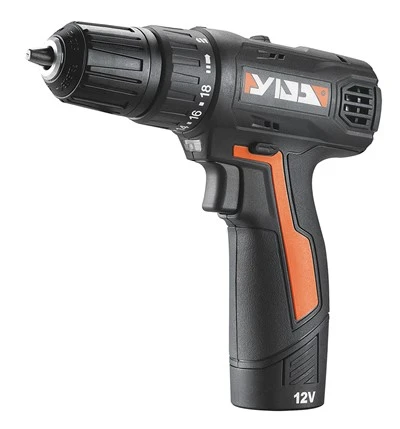
![12V Cordless Drill]() 12V Cordless Drill12V Cordless Drill for compact pilot drilling and light fastening. Review drilling capacity, chuck interface, speed...read more
-
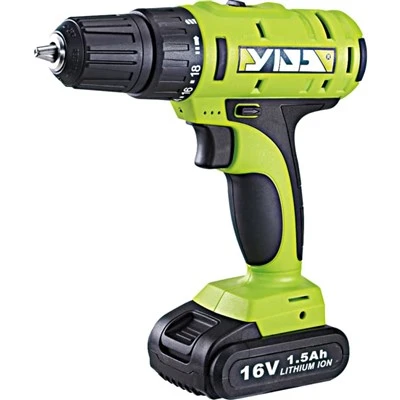
![16V Cordless Drill]() 16V Cordless Drill16V Cordless Drill for balanced cordless drilling for interior fit-out. Review drilling capacity, chuck interface,...read more
-
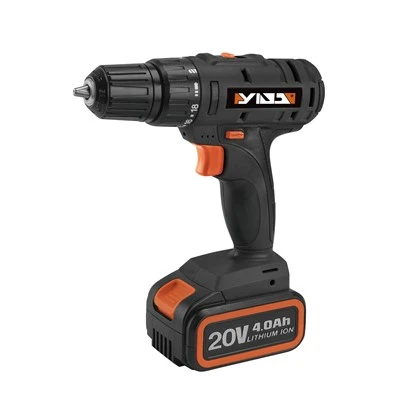
![20V Cordless Drill]() 20V Cordless Drill20V Cordless Drill for general jobsite drilling and assembly. Review drilling capacity, chuck interface, speed...read more
Send Inquiry